
Assessment and Osteopathy for Knee Pain in Bedminster, Bristol
We are trained to assess, diagnose and screen symptoms and are qualified to refer you to GP or other specialist if need be.

Does every step remind you something isn't right?
There are many different reasons for knee pain, so understanding your particular symptoms is an important starting point. At the Courtyard Osteopaths, near Bedminster in Bristol, we assess the knee alongside the hip, ankle and the way you move as a whole and help make an osteopathic treatment plan.
COMMON SYMPTOMS
What does knee pain feel like?
- Ache around, inside or behind the knee
- Pain when walking or climbing stairs
- Stiffness after sitting or first thing in the morning
- Swelling around the knee that reduces movement
- Pain behind or around the kneecap
- Clicking or grinding when moving: painless clicking is normal; painful clicking, catching or locking is not
- Weakness or a feeling that the knee may give way
- Difficulty bending or straightening the knee fully
- Pain that spreads into the thigh or calf
Whether your symptoms are recent or long-standing, we'll carry out a thorough assessment to understand what's contributing to your pain.
POSSIBLE CAUSES
What causes knee pain?
The knee is one of the body's busiest joints, absorbing forces every time you walk, run or climb stairs. Many different conditions can lead to knee pain. Common causes include:
- Sprains or strains from overstretching, twisting or overuse
- Tendon irritation such as patellar tendinopathy
- Muscle strains in the calves, quads or hamstrings
- Bursitis or irritation of the iliotibial band on the outside of the knee
- Pain after exercise or injury
- Ligament, meniscus or cartilage injuries, these may need medical assessment
- Muscle weakness or imbalance
- Pain referred from the hip, foot or lower back
- Osteoarthritis
Often the knee isn't the only area involved. Problems with foot mechanics, hip strength or pelvic alignment can change the way forces travel through the knee, increasing strain over time. This is why we assess the whole lower limb rather than focusing solely on the painful joint, and screen for whether medical assessment or imaging is needed.
Arthritis, sports injuries and overuse
Although osteopathy cannot reverse arthritis, it may help improve joint mobility, reduce stiffness and support comfortable movement.
For active patients, we may also help with problems related to running, cycling, football, gym training and other sports, helping you recover safely and reduce the risk of recurrence. See our sports osteopathy page.
YOUR VISIT
How can osteopathy help knee pain?
Osteopathy looks beyond the knee itself, considering how the hips, ankles and feet influence the way you move, with the aim of improving mobility and reducing discomfort.
At your first appointment, your osteopath will want to hear how your knee is affecting you. They'll ask when the problem started, what makes it better or worse and which activities you find difficult. They'll assess how your knee moves and look at how your hips, ankles, feet and surrounding muscles work together, as these can all influence the way you move. They'll then explain their findings and discuss whether osteopathic care may be helpful, or whether further investigation or advice from your GP would be more appropriate.
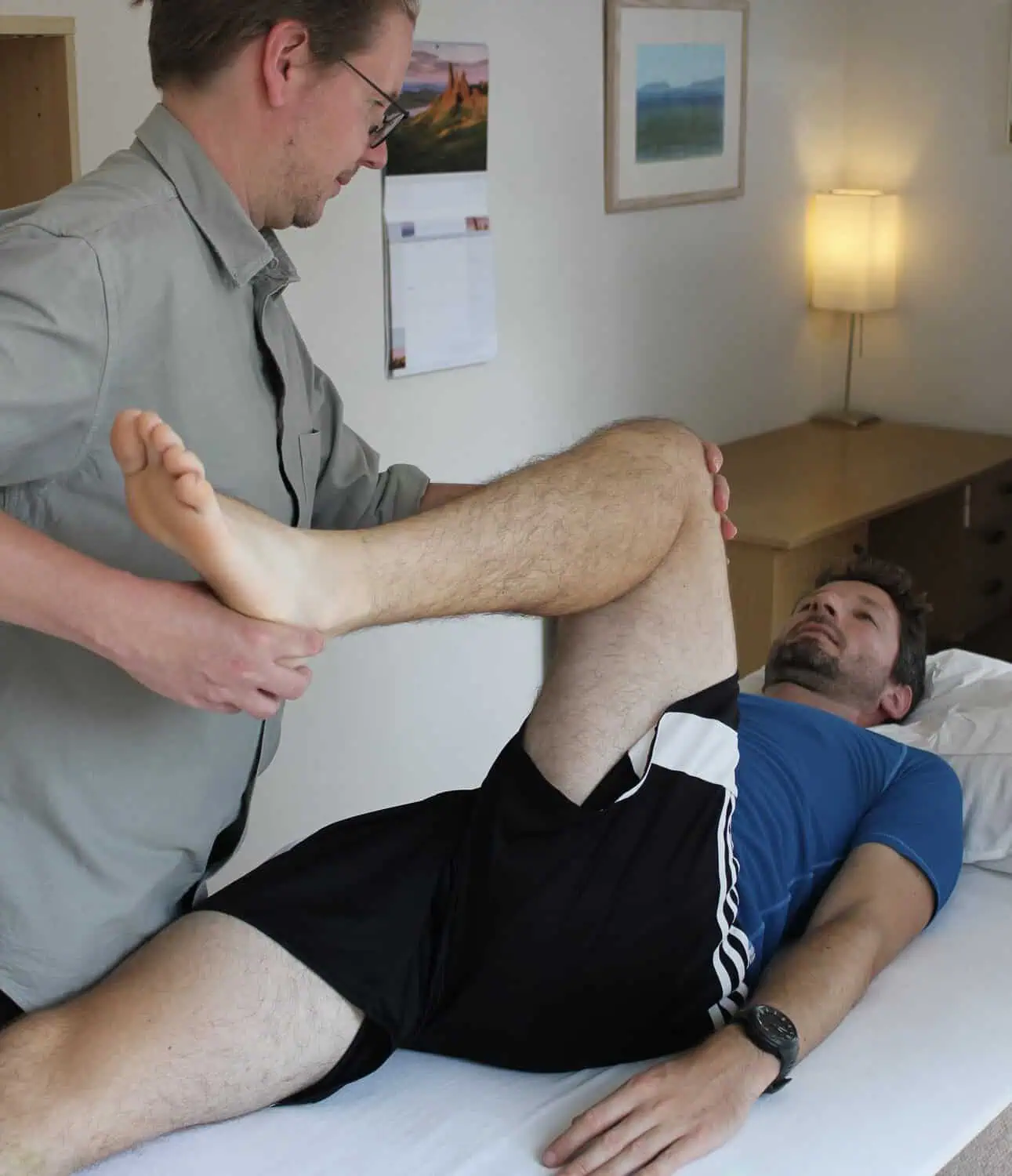
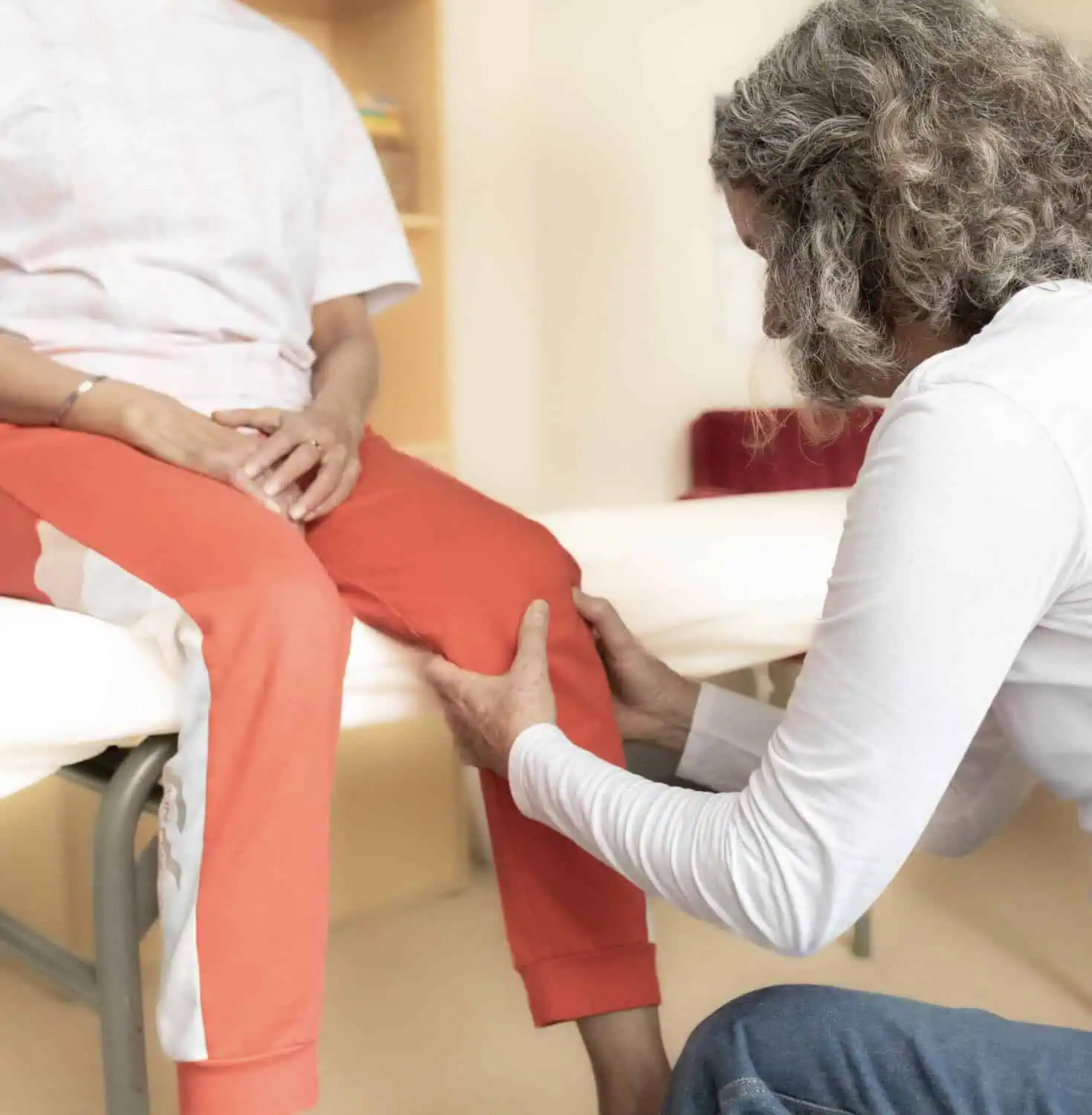
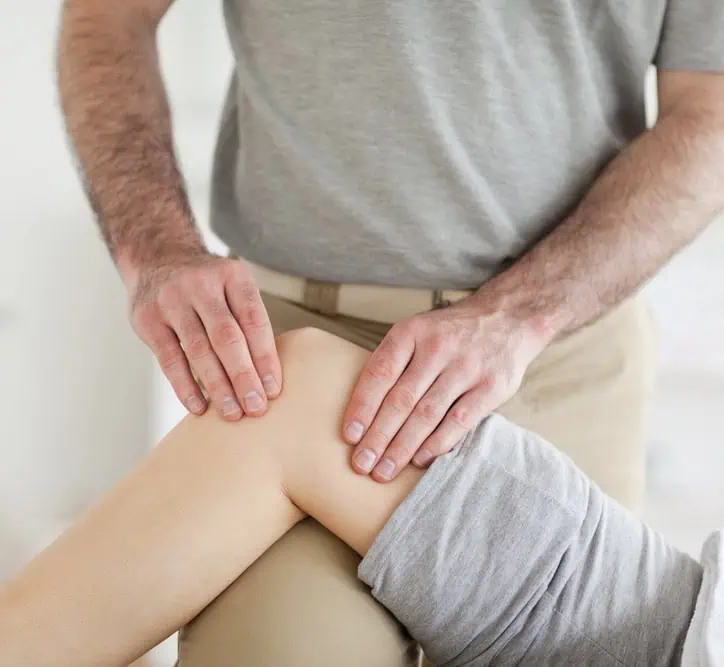
Osteopathic techniques, explained as we go and where appropriate, may include:
- Assessment of gait
- Gentle mobilisation of the knee and surrounding joints
- Soft tissue work to reduce muscle tension
- Techniques to the hips, ankles and lower back joints where appropriate
- Cranial osteopathy
- Stretching techniques
- Exercises to improve strength, balance and flexibility
- Advice on walking, footwear and activity modification
- Rehabilitation to support long-term recovery
The emphasis is on finding an approach that makes sense for your particular problem.
Why choose the Courtyard Osteopaths?
Rather than approaching every knee problem in the same way, we take the time to understand what is happening in your particular case.
Patients choose us because we offer:
- Longer appointments that allow time to listen
- Careful movement based physical assessment and screening
- Assessment of how the knee works in relation to the rest of the leg
- Clear explanation of working assessment and expectations
- GP or medical referral where appropriate
- Gentle and safe techniques suitable for all ages and health conditions
- Expertise in cranial osteopathy
- Relevant advice and simple exercise programmes
- Realistic timelines
- Progress reviews each session
- Focus on long-term recovery, not just short-term relief
We find the best results come from understanding how your knee relates to whole body movement, rather than focusing only on the painful knee.
KNEE PAIN FAQs
Frequently Asked
NHS advice for new knee pain or a flare-up is to put as little weight on your knee as possible at first, use an ice pack or bag of frozen peas wrapped in a tea towel for 20 minutes every 2 to 3 hours, and take pain relief. After the first few days, gradually increase activity and strengthening exercises, mixed with rest periods. It's often beneficial to start by doing 50 percent of what you think you can do.
Typical arthritic knee symptoms are stiffness and mild swelling, often in both knees and common in older adults. An X-ray is needed to confirm the diagnosis. While osteopathy cannot cure arthritis, our sessions aim to help reduce stiffness, improve movement and support your ability to stay active.
Changes in the way your hips, feet or ankles move can place extra strain on the knee, especially over time. During your assessment we'll examine your gait, whole lower limb, pelvis and spine to identify any contributing factors.
Exercises are an important part of recovery. We'll recommend simple, progressive exercises to improve strength, balance and knee stability, helping you continue improving between appointments.
With sports-related injuries, an osteopathic assessment can help identify contributing factors and determine whether osteopathy is appropriate, for minor sports injuries such as strains and sprains, or whether the injury needs medical attention. Minor sports injuries can usually be managed with osteopathic techniques to aid load management, alongside a strength programme. Each case is different, as are the timeframe and possible outcomes.
If your knee pain does not improve within a few weeks, see your GP.
If the knee is very painful, you cannot move it or put weight on it, it is badly swollen or has changed shape, it locks, gives way or clicks painfully, or you have a high temperature with redness or heat around the knee, contact NHS 111. In many areas you can also self-refer to the NHS community musculoskeletal service.
PRACTICAL ADVICE
- Short-term easing off by resting your knee is different from the longer-term picture, where gradually increasing activity and strengthening do most of the work. How quickly you move from one to the other depends on your knee
- If it's not urgent, put as little weight on your knee as possible for a few days
- To reduce pain and swelling, use an ice pack (or bag of frozen peas) wrapped in a tea towel for 20 minutes every 2 to 3 hours
- To relieve joint stiffness or muscle spasms, use a heat pack (or hot water bottle) wrapped in a tea towel
- After the first few days, gradually increase activity and strengthening exercises, mixed with rest periods: Dr Michael Rowe has some good ones. Stop if your pain gets worse and see your GP for advice
- Shorter or flatter walks, fewer stairs in one go, a lower step height, swapping impact for cycling or swimming for a period, then build back in steps as tolerance improves
- When kneeling or gardening, using a kneeling pad, alternating knees and standing up every few minutes will reduce the load on the front of the knee. Bursitis from kneeling needs rest from kneeling in particular
- Keeping a rough weekly note of a couple of simple markers, such as stairs (how many, and how it feels going down) and comfortable walking, helps us see the trend rather than the worst day
Sources and further reading
Articles
READY WHEN YOU ARE
Ready to book a knee pain assessment?
If knee pain is limiting your movement or activities, don't wait for it to get worse. We're here to help you return to the activities you enjoy around Bristol.
Helping knee pain sufferers throughout Bedminster, Southville, Long Ashton and across the Bristol area.
Related: Back pain · Sciatica · Hip pain, or is it the back? · Ankle and foot pain · Book a knee pain appointment