Assessment and Osteopathy for Elbow Pain in Bedminster, Bristol
We are trained to assess, diagnose and screen symptoms and are qualified to refer you to GP or other specialist if need be.

Wondering why your elbow still hurts?
At the Courtyard Osteopaths, we regularly help people with elbow pain caused by overuse, sporting injuries, work-related strain and everyday activities. Our experienced osteopaths take time to understand not only where your pain is, but why it has developed, so the sessions are adapted to your individual needs and lifestyle.
COMMON SYMPTOMS
What does elbow pain feel like?
- Pain or tenderness on the inside or outside of the elbow
- Pain around the joint when gripping, lifting or carrying
- Weakness lifting a kettle, shopping bag or child
- Tenderness on the bony bumps of the elbow
- Stiffness when straightening or bending the elbow
- Pain when twisting a door handle or opening jars
- Aching that spreads into the forearm or wrist
- Pain during work, sport or repetitive activities
Whether your symptoms have been present for a few days or several months, we'll carry out a thorough assessment to understand what's causing and contributing to your pain.
POSSIBLE CAUSES
What causes elbow pain?
The elbow is involved in almost every movement of the arm and hand, so it's particularly vulnerable to overuse and repetitive strain. Elbow pain can develop gradually or appear suddenly after an injury. Common causes include:
- Tennis elbow (lateral epicondylitis)
- Golfer's elbow (medial epicondylitis)
- Tendon or bursitis irritation
- Pain, tenderness, bruising or swelling from sprains or strains
- Repetitive gripping, use or extension
- Poor mouse and keyboard ergonomics
- Minor sports injuries
- Heavy lifting or manual work
- Stiffness or osteoarthritis of the joints
- Muscle imbalance or weakness in the arm or shoulder, adding load to the elbow
- Neck problems referring muscular or nerve pain into the arm
Sometimes the painful area isn't the underlying cause. The shoulder, wrist and neck all influence how the elbow functions, so we assess the whole upper limb, neck and upper back to understand why symptoms have developed.
Tennis elbow, golfer's elbow and repetitive strain
Tennis elbow and golfer's elbow are among the most common elbow conditions. Despite their names, they don't just affect sports players. They often develop through repetitive gripping, lifting, gardening, DIY, computer work or manual occupations.
Osteopathy focuses on reducing irritation, improving the way the arm functions and gradually rebuilding strength so you can return to your normal activities with confidence.
YOUR VISIT
How can osteopathy help elbow pain?
Osteopathy considers how the elbow, wrist and shoulder work together, aiming to ease tension, improve flexibility and support more comfortable movement.
During your first appointment, your osteopath will take time to understand when your symptoms started, what makes them better or worse, and how they affect everyday activities. They will look at how your elbow functions alongside your wrist, shoulder, neck and upper back, as problems in these areas can sometimes be connected. Once they have completed their assessment, they will talk you through their findings and discuss whether osteopathic care is suitable, or whether further advice from your GP would be more appropriate.
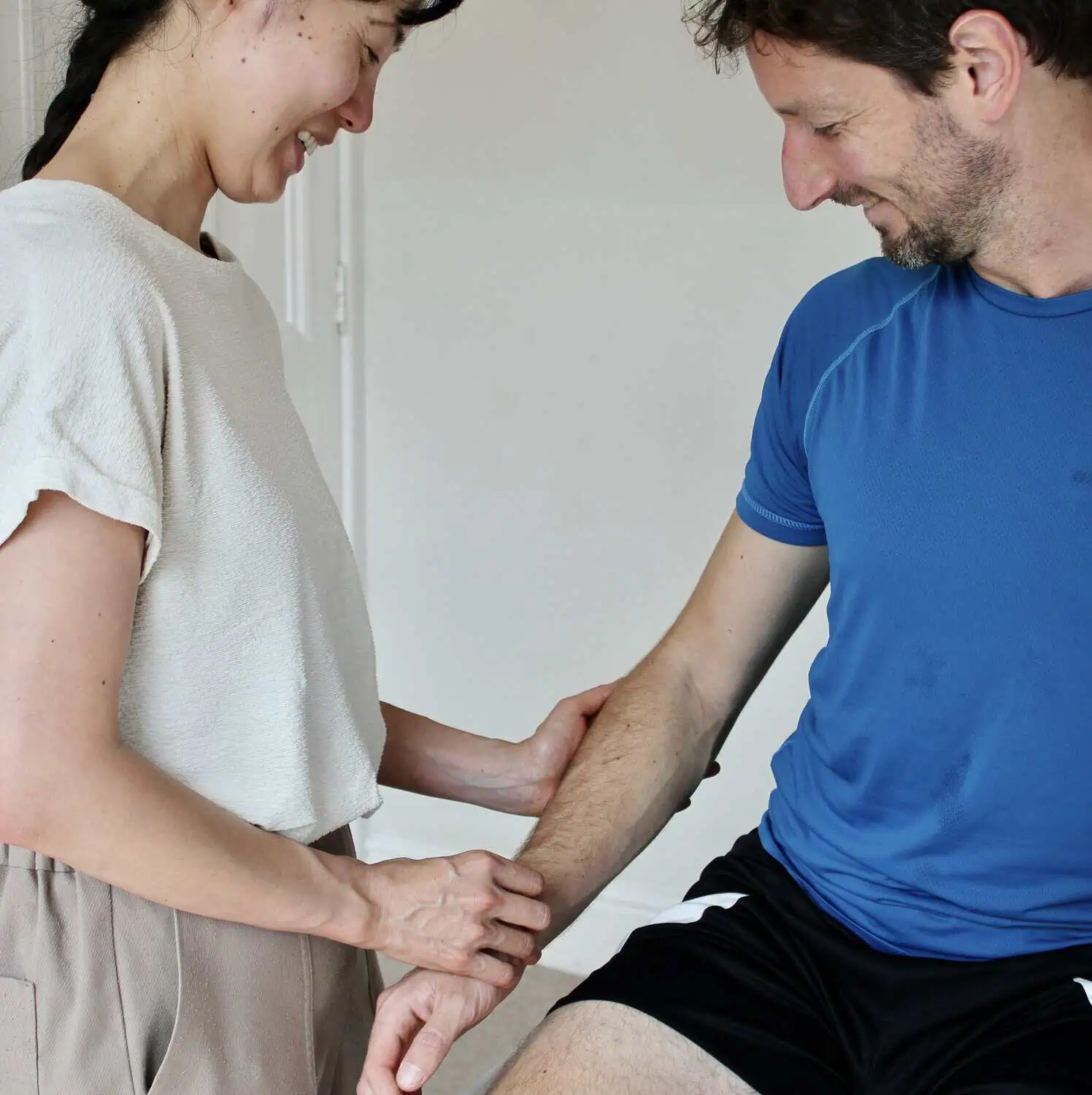
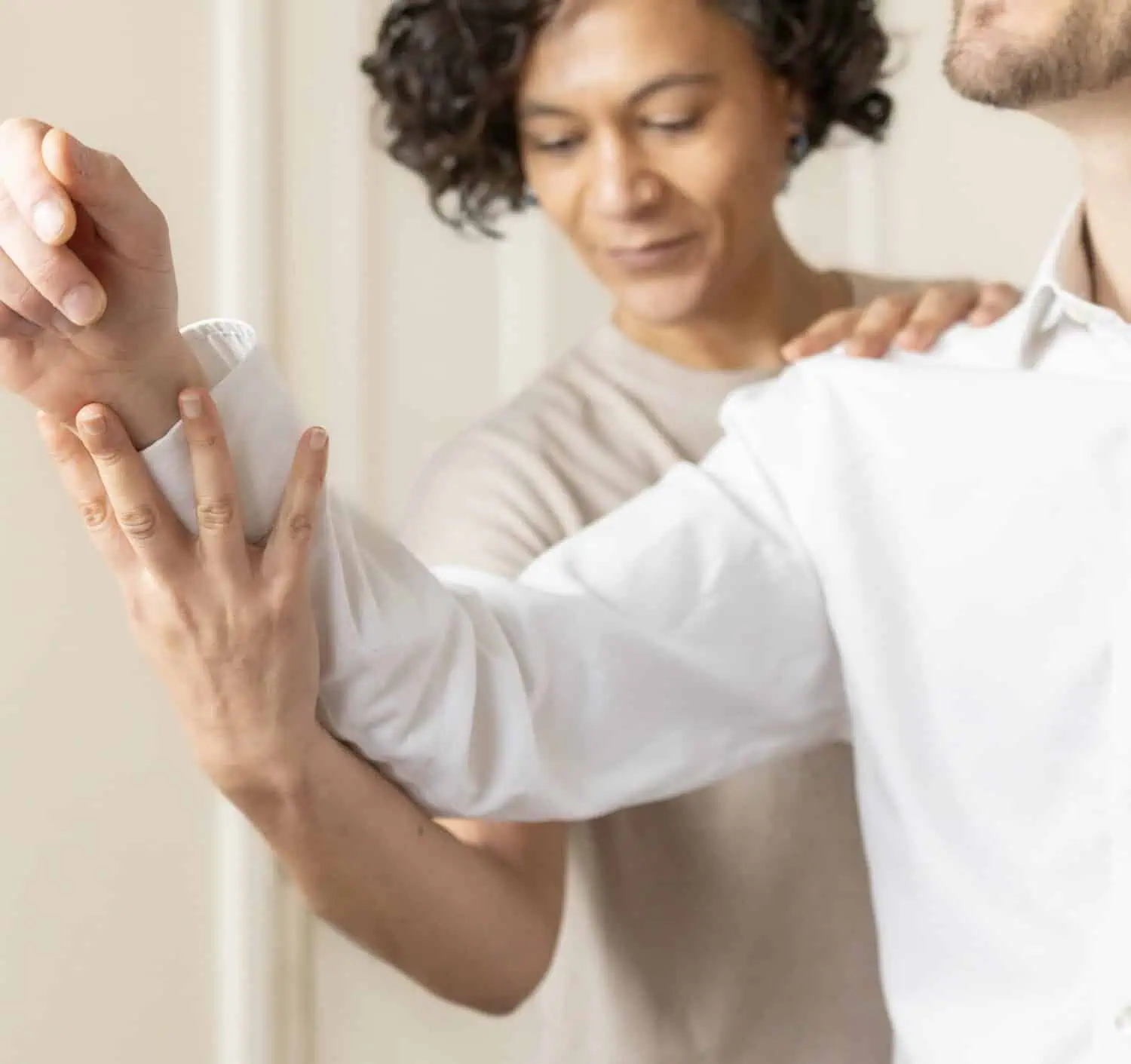
Osteopathic techniques, explained as we go and where appropriate, may include:
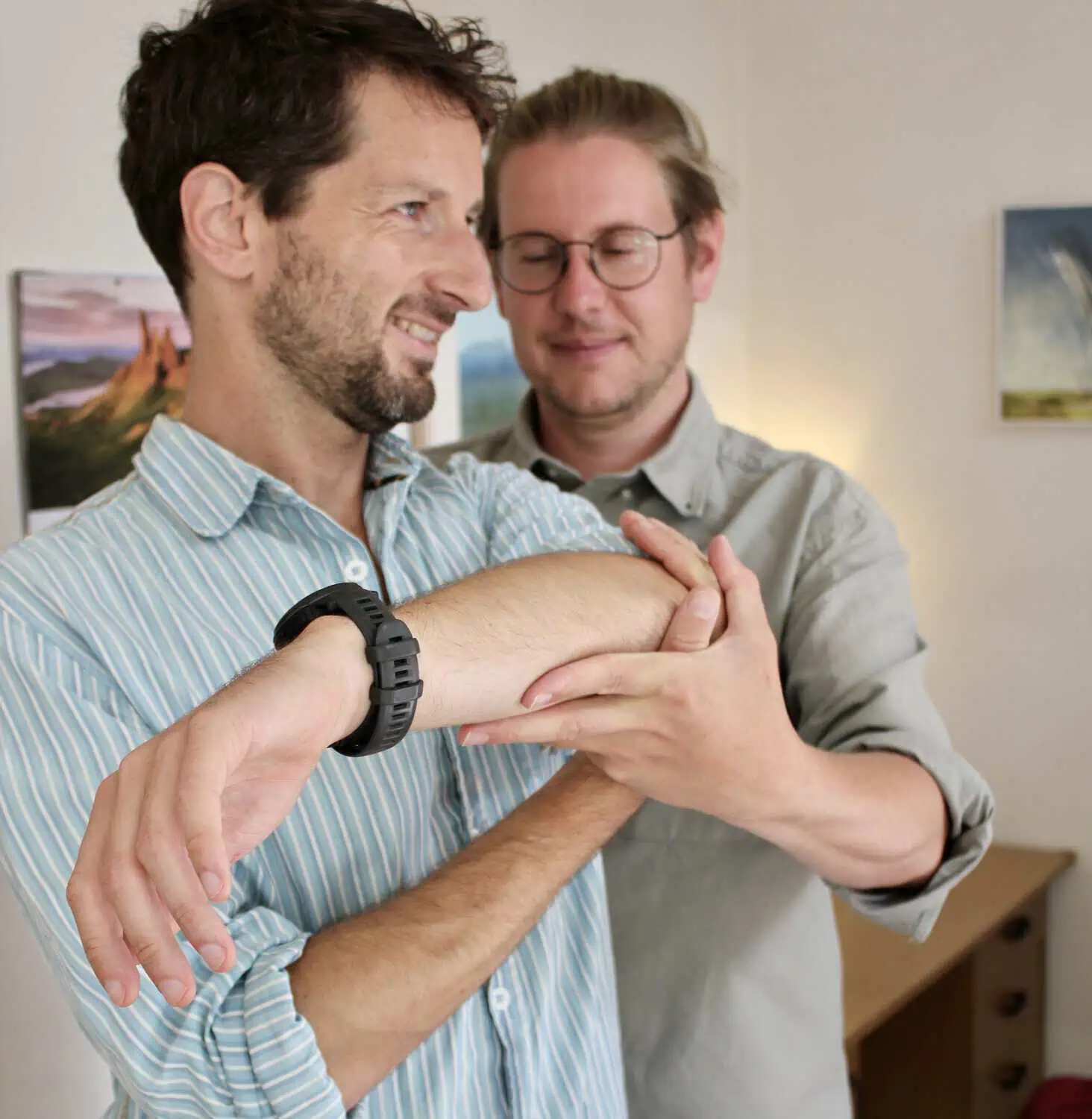
- Gentle mobilisation of the elbow, wrist, shoulder and other relevant joints
- Soft tissue massage to reduce muscle and tendon tension
- Movement and stretching techniques
- Cranial osteopathy
- Advice on work, sport and activity modification
- Exercises to improve strength and flexibility
- Ergonomic guidance to reduce strain
- Rehabilitation to support a gradual return to normal activity
Every osteopathic plan is personalised to your symptoms, daily activities and recovery goals.
Why choose the Courtyard Osteopaths?
Our highly trained osteopaths have many years of experience assessing elbow pain and upper limb injuries.
Patients choose us because we offer:
- Longer appointments that allow time to listen
- Careful movement based physical assessment and screening
- Clear explanation of working assessment and expectations
- GP or medical referral where appropriate
- Gentle and safe techniques suitable for all ages and health conditions
- Expertise in cranial osteopathy
- Relevant advice and simple exercise programmes
- Realistic timelines
- Progress reviews each session
- Focus on long-term recovery, not just short-term relief
We believe successful osteopathy involves understanding the whole movement system, rather than focusing only on the painful elbow.
ELBOW PAIN FAQs
Frequently Asked
Recovery depends on the underlying cause and how long your symptoms have been present. Many patients notice improvement within a few sessions, while tendon problems often require a longer period of rehabilitation because tendons have a poorer blood supply than muscles.
Exercises can be an important part of recovery. We'll show you simple, progressive exercises designed to improve strength, flexibility and tendon healing.
Yes. Occasionally pain felt around the elbow is referred from the neck or shoulder. During your assessment we'll examine these areas to ensure we identify the true source of your symptoms.
Sports tape strapping or an elbow strap may offload pressure on the elbow during activities. It can be useful as a short-term tool, but it's not a fix on its own. We can advise on this if appropriate.
See your GP promptly if elbow pain follows a fall or injury with swelling, deformity or inability to move the joint, if the elbow is hot, red or swollen, if you have a fever, or if you notice significant weakness, numbness or pins and needles in the hand.
PRACTICAL ADVICE
- Avoid or reduce activities that make your symptoms worse
- To reduce pain and swelling, use an ice pack (or bag of frozen peas) wrapped in a tea towel
- To relieve joint stiffness or muscle spasms, use a heat pack (or hot water bottle) wrapped in a tea towel
- Try doing some gentle exercises and stretches for elbow pain: Dr Michael Rowe has some good ones. Stop if your pain gets worse and see your GP for advice
- Rest your arm on a cushion on your lap to avoid more strain
- Pain relief such as paracetamol and ibuprofen may help, but be careful not to overuse and cause an aggravation of symptoms
- Sports tape strapping or an elbow strap may offload pressure on the elbow during activities in the short term
Sources and further reading
Articles
READY WHEN YOU ARE
Ready to book an elbow pain assessment?
If elbow pain is affecting your work, sport or everyday activities, don't wait for it to get worse. We're here to help you return to the activities you enjoy around Bristol.
Helping elbow pain sufferers throughout Bedminster, Southville, Long Ashton and across the Bristol area.
Related: Shoulder pain · Wrist and hand pain · Neck pain · Book an elbow pain assessment